Anatomy Courses: A Scientific Overview of Structure, Learning, and Applications
ByChloe Davis
Definition and Objective
Anatomy courses are educational programs designed to provide systematic knowledge of human body structures, their relationships, and functional significance. They are foundational in fields such as medicine, nursing, physiotherapy, and other health sciences.
The objective of this article is to address the following questions:
What are the fundamental concepts of human anatomy?
How are anatomy courses structured and delivered?
What mechanisms support the learning and retention of anatomical knowledge?
What are the broader applications and limitations of anatomy education?
Fundamental Concepts
Human anatomy is the scientific study of body structures at multiple levels:
Gross Anatomy: Study of structures visible to the nakeds eye, including organs, muscles, bones, and vascular networks
Microscopic Anatomy (Histology): Study of tissues and cellular organization
Developmental Anatomy: Examines changes in structure from embryonic development through adulthood
Functional Anatomy: Focuses on the relationship between anatomical structures and physiological function
Key components include:
Skeletal system: Provides structural support and protection
Muscular system: Enables movement and posture maintenance
Nervous system: Coordinates sensory input and motor output
Cardiovascular and respiratory systems: Support circulation and gas exchange
According to the Association of American Medical Colleges, anatomical knowledge is essential for safe and effective practice in health professions.
Core Mechanisms and In-Depth Explanation
Anatomy courses employ multiple mechanisms to enhance comprehension and retention:
Theoretical Instruction Lectures, textbooks, and digital resources provide foundational knowledge of structures and terminology.
Visual Learning Models, diagrams, and imaging studies (e.g., MRI, CT scans) help learners visualize complex anatomical relationships.
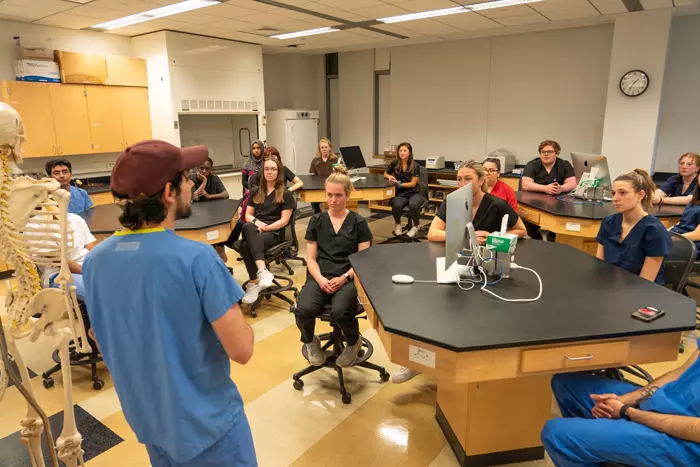
Practical and Laboratory Training Dissection and examination of cadaveric specimens, as well as virtual simulations, provide hands-on experience.
Integration with Clinical Relevance Courses emphasize clinical correlations to connect anatomical structures to medical procedures and diagnoses.
Assessment and Feedback Written examinations, practical tests, and interactive quizzes reinforce learning and identify areas for improvement.
Cognitive studies suggest that combining visual, tactile, and applied learning approaches improves long-term retention and spatial understanding of complex anatomical structures.
Comprehensive View and Objective Discussion
Anatomy courses serve as a cornerstone for multiple health disciplines. Their applications extend to surgery, diagnostics, physiotherapy, and research.
Considerations include:
Complexity of Human Anatomy: High volume of detailed information requires structured learning strategies
Ethical Considerations: Use of cadaveric specimens requires adherence to ethical and legal standards
Technological Integration: Digital models and virtual reality are increasingly used, supplementing traditional methods
Variability Among Programs: Differences in curriculum focus, assessment methods, and resources may influence outcomes
Limitations include the potential difficulty of translating theoretical knowledge into practical clinical skills and variability in learner retention of detailed information.
Conclusion and Outlook
Anatomy courses provide structured, comprehensive education on human body structures. They integrate theoretical instruction, visual tools, hands-on experience, and clinical correlation.
Future trends may include:
Expanded use of 3D and VR technologies for immersive learning
Integration of imaging and functional data to link structure and physiology
Development of standardized curricula to ensure consistency across institutions
These trends indicate ongoing evolution in anatomical education, emphasizing visualization, application, and technological enhancement.
Questions and Answers
1. What is the focus of anatomy courses? The study of human body structures, their relationships, and functional significance.
2. What types of anatomy are commonly taught? Gross, microscopic, developmental, and functional anatomy.
3. How is practical learning conducted? Through dissection, specimen examination, and virtual simulations.
4. Why is clinical relevance emphasized? It connects anatomical knowledge to medical procedures and patient care.
5. What are challenges in anatomy education? Complexity of structures, ethical considerations, and variability in learning retention.