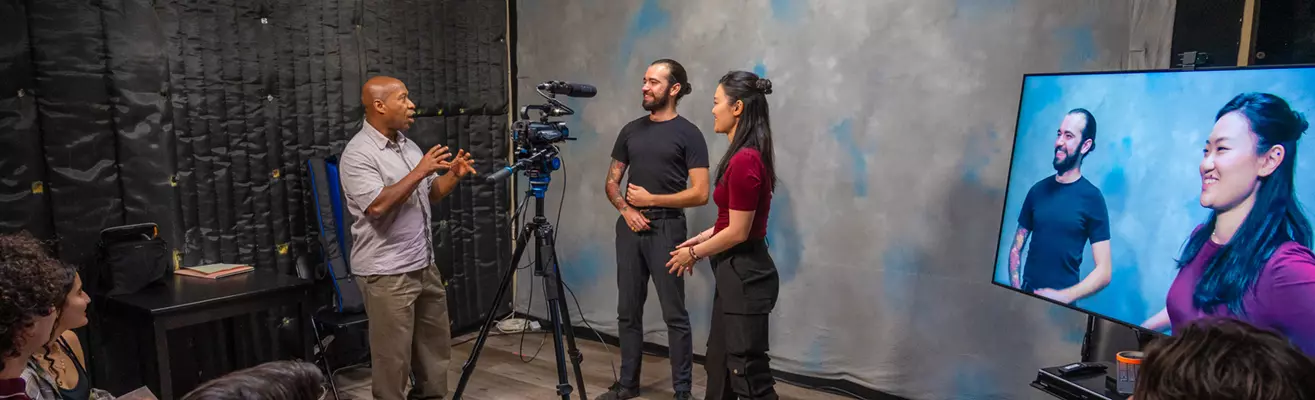
Film Acting Training as a Structured Performance and Screen-Based Expression System
ByChloe Davis
1. Objective Definition and Scope of Discussion
Film acting training refers to structured educational processes designed to develop performance abilities for screen-based media, including emotional expression, character embodiment, vocal control, and interaction with cinematic production environments. This article focuses on acting as a behavioral and cognitive system rather than artistic evaluation or industry outcomes.
The scope includes:
Foundational concepts of acting theory
Cognitive and emotional mechanisms of performance
Physical and vocal expression systems
Interaction between actor and camera-based environments
System-level interpretation of performance training structures
The objective is to describe how acting skills are developed through structured training systems and iterative performance practice.
2. Fundamental Conceptual Background
Film acting is a form of performance where individuals simulate or embody characters within scripted narratives for visual media. Unlike stage performance, film acting is influenced by camera framing, editing structure, and non-linear production processes.
Key conceptual elements include:
Character embodiment: constructing behavioral and psychological representation of a role
Emotional expression: controlled externalization of internal affective states
Physical expression: use of body movement, posture, and gesture
Vocal modulation: control of tone, pitch, rhythm, and articulation
Acting theory includes multiple schools of thought, such as:
Psychological realism approaches
Physical action-based methods
Behavioral observation frameworks
These frameworks emphasize different aspects of performance construction but share a common focus on believable representation of character behavior.
Film acting differs from theatrical performance due to:
Fragmented shooting sequences
Close-up camera perspective
Multiple takes and editing integration
Non-sequential narrative production
3. Cognitive, Emotional, and Physiological Mechanisms in Acting Training
Film acting training involves complex interactions between cognitive processing, emotional regulation, and physical expression systems.
3.1 Cognitive mechanisms
Actors engage in structured cognitive processes including:
Script analysis and narrative comprehension
Character motivation modeling
Memory encoding of dialogue and blocking
Situational simulation and behavioral prediction
These processes involve constructing mental representations of fictional scenarios and maintaining consistency across fragmented filming sessions.
3.2 Emotional regulation mechanisms
Performance requires controlled modulation of emotional states. Emotional expression in acting is not identical to spontaneous emotion but is often generated through cognitive recall, imagination, or situational simulation.
Research in affective neuroscience indicates that emotional expression involves interaction between:
Limbic system activity related to emotion processing
Prefrontal cortical regions involved in regulation and control
Mirror neuron systems associated with observed behavior replication
These systems contribute to the ability to simulate emotional states within controlled environments.
3.3 Physical and vocal mechanisms
Physical expression in acting involves motor control and body awareness. This includes:
Gesture precision and spatial awareness
Postural alignment and movement dynamics
Breath control and vocal projection modulation
Voice production involves coordination between respiratory systems, vocal cords, and articulatory structures, enabling variation in tone and delivery.
3.4 Memory and continuity mechanisms
Film production requires actors to maintain continuity across non-sequential scenes. This involves:
Episodic memory reconstruction
Behavioral consistency mapping
Emotional state recall across time gaps
4. System-Level Interpretation of Film Acting Training
Film acting training can be understood as a multi-layered system combining cognitive modeling, emotional simulation, and physical executions within cinematic production frameworks.
At a system level, the process includes:
Input layer: script material, character descriptions, and directorial guidance
Processing layer: cognitive interpretation and emotional modeling
Executions layer: physical and vocal performance in front of camera systems
Feedback layer: playback review, direction adjustments, and scene repetition
Iteration layer: refinement of performance consistency across takes
Film production environments function as distributed systems where acting performance is integrated with lighting, camera movement, sound recording, and editing processes.
The final cinematic output is the result of interactions between multiple system components rather than isolated performance actions.
From a broader perspective, acting training systems are influenced by cultural performance traditions, technological recording methods, and narrative structure conventions.
5. Summary and Conceptual Outlook
Film acting training is a structured performance development process involving cognitive modeling, emotional regulation, and physical expression within cinematic environments. It integrates psychological processes, behavioral simulation, and technical production constraints.
From a conceptual standpoint, acting functions as a system of coordinated representation where internal cognitive states are translated into external behavioral expressions under controlled production conditions. Ongoing developments in motion capture, digital production, and virtual environments continue to expand the complexity of performance systems.
6. Question and Answer Section
Q1: What is film acting training? It is a structured process for developing performance skills used in screen-based media.
Q2: How does film acting differ from stage acting? Film acting is influenced by camera framing, editing, and non-linear production processes.
Q3: What cognitive processes are involved in acting? Script analysis, character modeling, and memory-based continuity tracking are involved.
Q4: Is emotional expression in acting the same as real emotion? No, it involves controlled simulation and regulation of emotional states.
Q5: Why is continuity important in film acting? Because scenes are often filmed non-sequentially and require consistent character behavior.