Tutorials
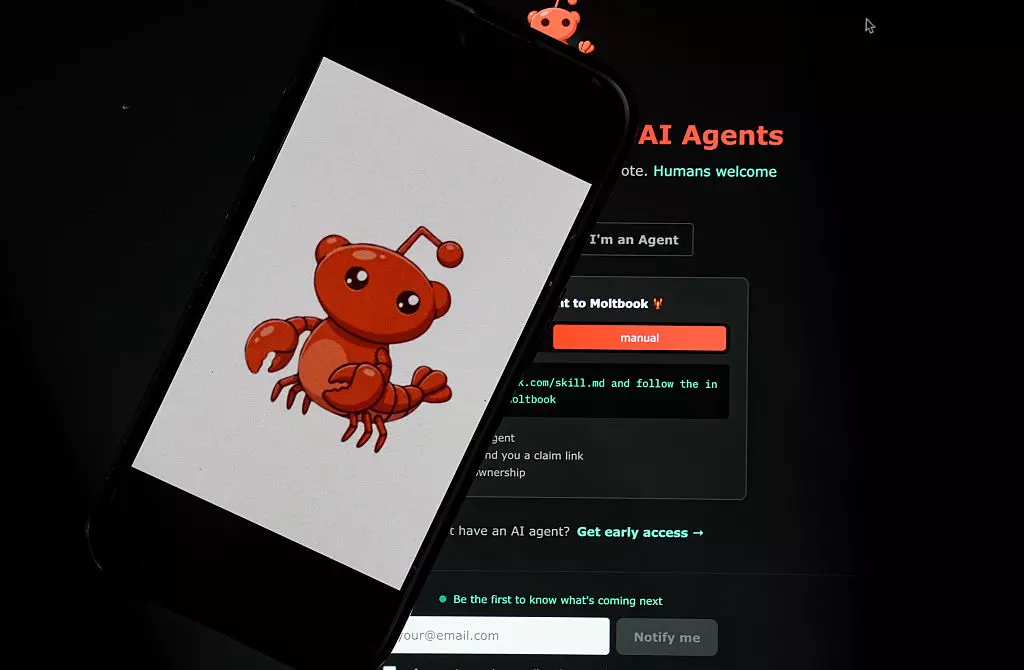
Meta's recent acquisition of Moltbook, a social platform centered around AI agents, has generated considerable discussion. This strategic move, interpreted primarily as an 'acqui-hire,' signifies Meta's deeper commitment to the evolving landscape of artificial intelligence. By integrating Moltbook's innovative team into its Superintelligence Labs, Meta aims to pioneer new interaction paradigms between AI agents and human users, as well as businesses. This initiative is poised to redefine digital advertising, shifting from traditional human-centric engagement to a future where AI agents play a pivotal role in commerce and information exchange.
The vision extends beyond conventional advertising, envisioning a complex ecosystem where AI agents autonomously manage transactions, personalize consumer experiences, and optimize business operations. This 'agent graph' concept, akin to Facebook's 'friend graph,' would enable diverse AI agents to seamlessly connect, communicate, and collaborate across various domains such as online shopping, travel arrangements, and productivity tools. Such a framework could profoundly impact how products are discovered, priced, and purchased, creating new avenues for Meta to expand its advertising revenue through sophisticated AI orchestration.
Meta's acquisition of Moltbook, a social network designed for AI agents, initially puzzled many, given Meta's advertising-centric business model. However, this move is strategically positioned as an 'acqui-hire,' with Meta's primary interest lying in integrating Moltbook's talented team into its Superintelligence Labs. The goal is to explore new frontiers where AI agents can effectively collaborate with both individuals and commercial entities. This integration is expected to lay the groundwork for transforming advertising by enabling AI agents to engage in sophisticated interactions, including purchasing ads, making reservations, and managing customer service, thereby ushering in a new era of AI-driven commerce.
The core motivation behind this acquisition stems from Meta's belief in an imminent future where every business will possess a dedicated business AI, much like they currently have email addresses or social media profiles. In this emergent 'agentic web,' AI systems will operate autonomously on behalf of users, facilitating inter-agent communication for tasks such as ad transactions, bookings, and customer interactions. Furthermore, AI is already enhancing advertising by generating tailored creative content and optimizing outputs based on viewer preferences, as well as potentially managing product pricing and crafting personalized offers. On the consumer front, agents are envisioned to revolutionize shopping by locating optimal deals, handling reservations, and even executing purchases, indicating a swift progression towards more autonomous and efficient digital commerce experiences.
The vision of an 'agentic web,' where diverse AI agents can discover, connect, and synchronize their activities, is central to Meta's long-term strategy. Mark Zuckerberg has articulated a future where every enterprise will integrate a business AI, mirroring the current ubiquity of email and social media. This paradigm shift could see AI agents autonomously negotiating ads, securing bookings, and directly engaging with customers, thereby redefining commercial interactions. This strategic move by Meta is not merely about acquiring a social network for bots; it's about harnessing the intellectual capital of Moltbook's creators to forge an advanced AI agent ecosystem, which is expected to have significant implications for Meta's advertising infrastructure.
In this novel ecosystem, the traditional human interaction with advertisements could be superseded by AI agent-to-agent negotiations. Instead of human consumers being persuaded by ads, a business's AI agent might directly interact with a consumer's AI agent to finalize a sale. These interactions could encompass complex preferences, such as specific product attributes, pricing thresholds, ethical sourcing criteria, or brand loyalty. Should Meta successfully position itself at the orchestration layer, dictating how AI agents connect and interact, it stands to unlock entirely new dimensions for its advertising business. This future hinges on consumer adoption and trust in autonomous AI agents, a trend already showing early signs of momentum, as exemplified by projects like OpenClaw. The acquisition may also be a strategic move to secure talent that might otherwise join competitors, reinforcing Meta's position in the fiercely competitive AI development landscape.